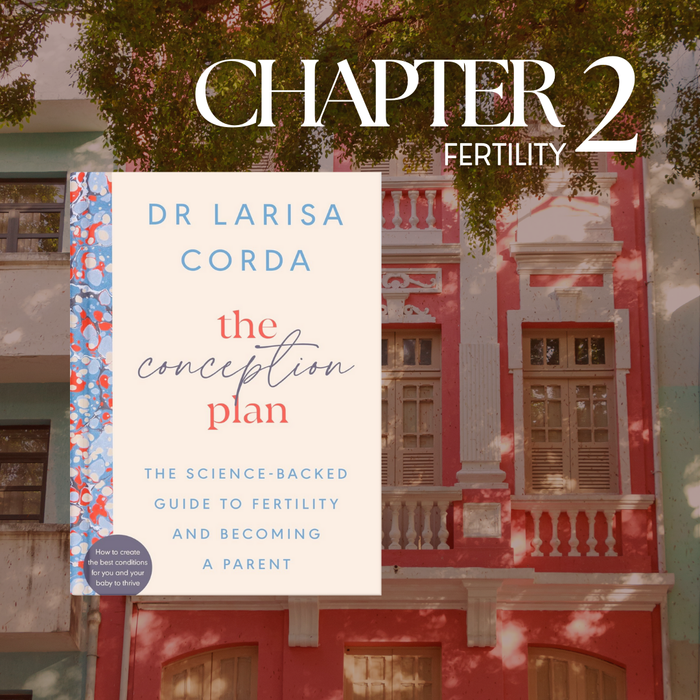
Exploring The Conception Plan by Dr Larisa Corda
Trying to conceive can feel like a maze of advice, emotions and medical information. In The Conception Plan, Dr Larisa Corda brings those strands together in a practical framework spanning reproductive health, lifestyle, nutrition, emotional wellbeing and medical care. Our guide to why preconception health matters explores that wider preparation in more detail.
Written by femme health.
A personalised rather than one-size-fits-all approach
A central theme of the book is that fertility is influenced by many factors and that no single routine, supplement or lifestyle change can guarantee conception. Corda encourages readers to understand their own circumstances and seek appropriate clinical input when needed. If supplements are part of that conversation, our fertility supplement comparison separates different formulations and use cases.
That distinction matters: healthy habits can support general and preconception health, but infertility is a medical issue and should not be reduced to whether somebody ate perfectly, slept enough or managed stress well enough.
Key themes from the book
Holistic assessment
Looking at reproductive history, medical conditions, lifestyle and emotional wellbeing together rather than treating fertility as one isolated measurement.
Nutrition
Using a balanced diet as the foundation for health and preconception care. Specific foods cannot guarantee better egg quality or pregnancy, but adequate nutrition matters before and during pregnancy.
Lifestyle
Sleep, movement, smoking, alcohol and general health can all be relevant. The aim is realistic support rather than turning fertility into a full-time self-improvement project.
Mind and body
Mindfulness and stress-management tools may help people cope with the emotional burden of trying to conceive. They should not be presented as a cure for infertility. We look more closely at the mental-health impact of fertility problems elsewhere in our fertility hub.
Medical treatment
The book also acknowledges that medicines, investigations and assisted reproductive technologies may be necessary depending on the cause of fertility problems. Our article on why “just get IVF” oversimplifies infertility gives useful context around treatment, access and emotional load.
Ongoing support
Fertility journeys can involve waiting, uncertainty and treatment decisions. Emotional and clinical support can be valuable throughout.
Where the book fits
The Conception Plan is best read as a framework for thinking about preconception health, not as a promise that following a particular lifestyle will produce a pregnancy.
If you have been trying for a year without conceiving, the NHS advises speaking to a GP. Seek advice sooner if you are aged 36 or over or already know there may be a fertility problem. Our guide to a fertility consultation with your GP explains what that first stage can involve.
Our book-club takeaway
The useful message is agency without blame: understand the parts of health you can influence, get good information, and involve qualified professionals when a fertility problem needs investigation or treatment. You can also browse our wider fertility and pre-conception support range for relevant tracking, testing and wellbeing options.
Final thoughts
Fertility can be medical, practical and deeply emotional at the same time. Corda's book tries to hold all three together, offering readers a structure for asking better questions without pretending there is one perfect route to conception.