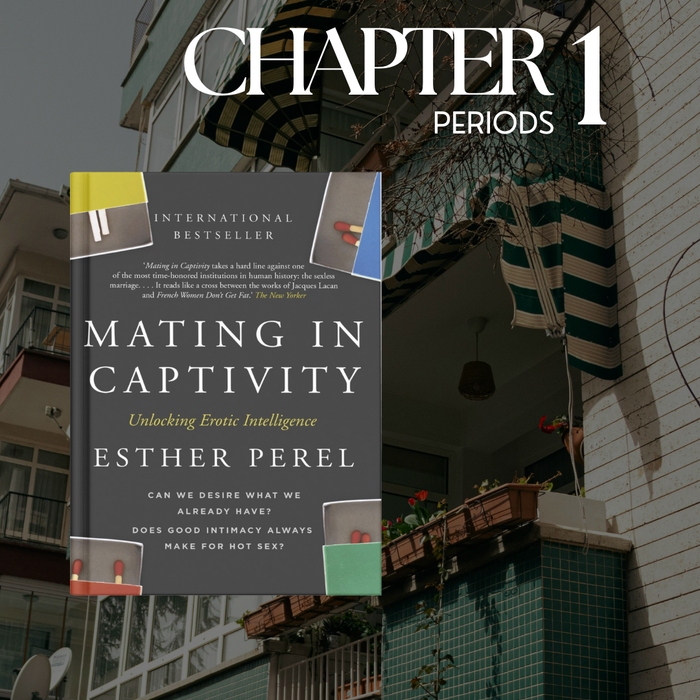
Navigating intimacy with Mating in Captivity
In Mating in Captivity, therapist Esther Perel explores a tension many long-term couples recognise: the security and familiarity that support closeness do not always create the novelty and distance that can fuel desire.
Rather than treating a “healthy sex life” as a quota, the book asks how couples can make room for eroticism, curiosity and individuality inside a committed relationship.
Security and desire
Perel argues that emotional closeness and intimacy can pull in different directions from erotic desire. Familiarity can create trust and comfort, while desire may respond to novelty, imagination, autonomy and seeing a partner as a separate person rather than an extension of everyday domestic life.
This is a framework, not a universal rule. Couples vary widely in how often they want sex, what intimacy means to them and how desire changes with health, stress, pregnancy, parenting, menopause, medication or relationship circumstances.
Four ideas worth discussing
Emotional intimacy
Sex can be one way of expressing closeness, but emotional intimacy also develops through trust, vulnerability, conversation and shared experience.
Novelty and play
Changing routines, sharing fantasies or trying something new can make intimacy feel less automatic, provided both people are comfortable and consenting.
Communication
Talking about desire, boundaries, pain, preferences and changes in libido can be more useful than assuming a partner should already know.
Pressure is not intimacy
There is no “correct” amount of sex. A satisfying relationship can look different across couples and across different stages of the same relationship.
When desire changes
Desire can change for many reasons, including stress, tiredness, relationship conflict, pain, medication, hormonal changes and mental or physical health. Treating every dip in desire as a relationship failure can create more pressure.
If sex is painful, desire has changed suddenly, or sexual difficulties are causing distress, a GP, sexual-health professional or qualified therapist can help investigate what is happening. During perimenopause and menopause, vaginal dryness is one common physical reason sex can become uncomfortable.
Mating in Captivity: common questions
What is Mating in Captivity about?
Esther Perel explores why emotional security and erotic desire do not always rise together in long-term relationships, and how autonomy, novelty, imagination and communication can influence desire.
Does a healthy relationship need a certain amount of sex?
No. There is no universal frequency that defines a healthy sex life. Desire varies between people and can change with stress, health, medication, fertility treatment, pregnancy, parenting and menopause.
Is the book only about sex?
No. It is also about identity, closeness, independence, communication and the tension between familiarity and novelty inside committed relationships.
Our book-club takeaway
The strongest idea in Mating in Captivity is not that every couple must become more sexually adventurous. It is that long-term desire deserves curiosity. Intimacy can include closeness and separateness, security and surprise, conversation and play.
Final thoughts
Perel invites couples to move away from a pass-or-fail view of sex and towards a more honest conversation about what makes each person feel connected, desired and free enough to be themselves. For practical products around comfort, vaginal health and desire, browse our Bladder, Intimate Health & Desire collection.