Have questions?
Chat with our team. Available from 9am - 5pm, Monday - Friday.
Skip to content
Low stock
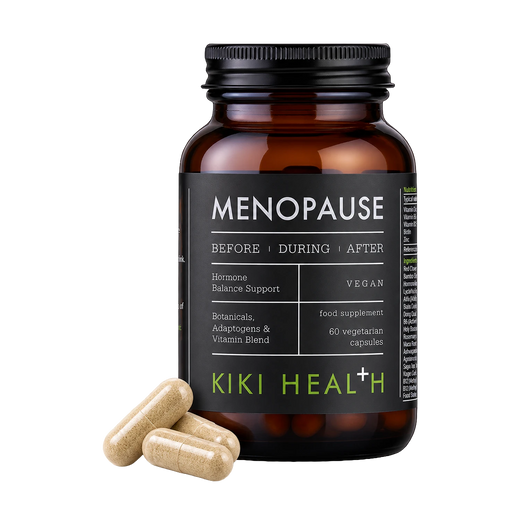
60 Capsules - 30 days supply
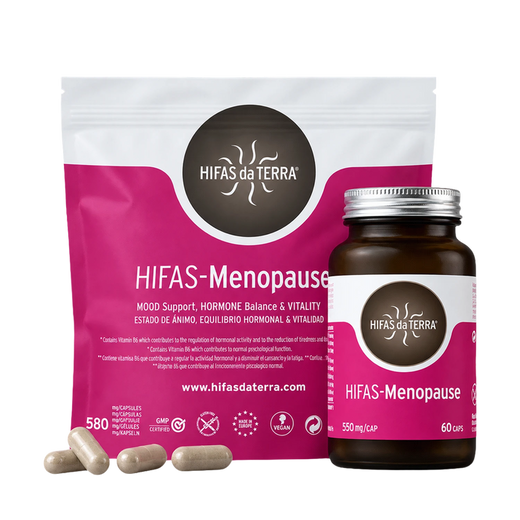
Perimenopause and menopause don't have to mean navigating hormonal change alone. The KIKI Health Menopause capsules are a natural blend of vitamins and time-honoured botanicals — including Red Clover, Sage, Hops, and Brahmi — offers gentle, plant-based support for hot flushes, mood, sleep, and everyday comfort during midlife's biggest transition.
KIKI Health Menopause Capsules are a comprehensive daily formula created to support women throughout perimenopause and menopause. Each serving combines vitamins D, B6 and B12, biotin and zinc with a broad botanical blend including red clover, sage, hops, Brahmi, maca, ashwagandha, dong quai and Korean ginseng.
The nutritional formula supports several areas that become particularly relevant during midlife. Vitamin B6 contributes to normal hormonal activity, vitamins B6 and B12 help reduce tiredness and fatigue, vitamin D supports the maintenance of normal bones and zinc helps protect cells from oxidative stress. Red clover, sage and hops have also each been studied independently for menopausal symptoms such as hot flushes, giving the formula a well-considered combination of established nutrients and traditionally used botanicals.
Made with 100% active ingredients and no fillers or bulking agents, the capsules provide an easy two-a-day addition to your routine. Medical advice: if you take prescription medication, use HRT, have a medical condition or are under medical supervision, check with your GP or pharmacist before use. Herbal menopause supplements can interact with medicines, and red clover contains phytoestrogens. Ashwagandha also requires additional caution with thyroid or autoimmune conditions and should be avoided during pregnancy unless specifically advised by a healthcare professional.
Delivery
Returns
View the shipping policy here.
View the returns policy here.
Please note: Orders shipped to Ireland femme will pay the customs charges.
Split your purchase into 3 interest-free payments.
Interest-free. Your exact payment schedule and eligibility are confirmed by Klarna at checkout. Terms apply.
Split your purchase into 4 interest-free payments.
Interest-free. Your exact payment schedule and eligibility are confirmed by Clearpay at checkout. Terms apply.
Julie Gough shares expert tips for navigating menopause naturally. Improve hormone balance, manage symptoms, and feel your best through diet and lifestyle.
Learn moreAn interview between femme and Grace Gordon, founder of FluxxBox Grace, you’ve coined the term “the perfect storm” when talking about menopause and puberty clashing in the same household. Can you explain what you mean by that? "Absolutely. The “perfect storm” is when a mother is going through perimenopause or menopause at the exact time her daughter is starting puberty. It’s this collision of two intense hormonal life stages, one where your oestrogen levels are dropping, and one where hers are skyrocketing. Imagine mood swings, irritability, anxiety, and sleeplessness… on both sides. It’s not just a challenge for our bodies, but for family relationships too." Why do you think this is becoming more common? "There are two main reasons. First, puberty is starting earlier than ever. Second, more women are having children later in life. If you had your daughter in your mid-to-late thirties, by the time she’s hitting puberty, you may be entering perimenopause. So while she’s finding her identity and pushing for independence, you’re trying to navigate the emotional and physical changes that menopause brings. It’s a hormonal overlap that’s not just inconvenient, it can feel overwhelming." What does that actually look like day-to-day? "On a daily basis, it can mean there’s a lot more tension in the house. She’s pulling away because that’s what teens do, she needs to develop her own identity, but at the same time she still needs you as her safe place. Meanwhile, your own hormonal shifts during menopause might make it harder to stay calm, patient, and resilient. You might find yourself snapping more easily, or feeling emotional for no obvious reason. Suddenly there’s a lot more shouting, door slamming, and sometimes even silent standoffs." That sounds exhausting. How do mothers begin to “weather the storm”? "The first step is awareness. Recognise what’s happening, both in your body and in hers. Notice your triggers and be honest about them. When you feel your stress levels rising, try to pause and take deep breaths. Remind yourself that you’re both riding an emotional rollercoaster." Should mothers talk openly to their daughters about menopause? "Yes, but with sensitivity. They may be open to talking about it or may not be in the headspace to hear about your experience at the moment. You could say something like, “I’m going through menopause right now, and my emotions can be a bit all over the place, kind of like what you’re feeling.” This normalises hormonal changes and helps her see that emotions are a natural part of our life cycles. It’s about creating space for mutual understanding." How important is shared activity in this? "Incredibly important. Shared activities create non-confrontational opportunities to connect, (where the focus isn't Puberty or menopause). Exercise together, cook together, or have those brilliant conversations in the car when you’re not making direct eye contact, those can be surprisingly honest moments." Let’s talk about self-care for mothers. Why is that so critical during menopause? Because you cannot pour from an empty cup. If you’re running on fumes, your patience, emotional regulation, and resilience will suffer. During menopause, prioritising good sleep, balanced nutrition, and stress management isn’t indulgence, it’s survival. And your daughter is watching. She learns emotional regulation by seeing you regulate your own. You’ve mentioned that menopause and puberty clashing doesn’t have to be purely negative. How so? Exactly. While being in the middle of The Perfect Storm can feel like chaos, it’s also an opportunity for deeper connection. You’re both going through hormonal transformations, just at opposite ends of the spectrum. You can empathise with her on a unique level, because you understand what it’s like to have your hormones driving your emotions. This can make you a more compassionate and insightful guide for her. Many parents worry about getting “the period talk” right. How can they take the pressure off? That’s why I created FluxxBox, the complete first-period confidence kit. It gives parents a practical, thoughtful way to prepare their daughters for their first period, without the stress of wondering if they’ve covered everything. Menopause can make you feel emotionally and mentally drained, so having a tool that’s ready-made for this milestone can be a lifesaver. What’s inside a FluxxBox? Everything a girl needs to feel confident and prepared, feel-good treats, age appropriate and holistic educational materials, and things to make her feel supported. It’s about giving her the knowledge and tools she needs, so her first period and her cycles are something she understands for life, not something she fears. You’ve spoken about conversation being the starting point for confidence. How does that tie in with your mission? Confidence starts with knowledge, and knowledge starts with conversation. Whether we’re talking about puberty or menopause, silence breeds anxiety. When we create open dialogue in our homes, we help our daughters see these changes as normal, healthy parts of life. For mums who think their daughter might be close to starting her period but aren’t sure, do you have any resources? Yes, we have a free quiz designed for parents to take alongside their daughters. It helps you spot the signs that puberty is progressing and estimate when her periods might begin. It only takes five minutes, but it can make a huge difference in feeling prepared. And during menopause, when your struggling with things like brain fog, a clear, structured tool can be incredibly reassuring. What’s your final piece of advice for mums in menopause navigating this “perfect storm”? Give yourself grace. You’re managing menopause and parenting a child through puberty, and that’s no small feat. Don’t try to be perfect. Focus on connection over perfection. Take breaks when you need them. And remember that both you and your daughter are learning how to navigate big life changes, side by side. Want more support for your daughter? Follow @fluxxbox on Instagram to become part of our growing community of parents and carers all looking for the best way to give their daughters a positive start to their periods. And don't forget to sign up to FLOmail, your weekly dose of period knowledge, advice and trending teen news. For more support for you and menopause follow @femmehealthstore on Instagram where we share our real advice and honest thoughts on our hormonal fluctuations. And sign-up to the Know Your Flow newsletter to get your monthly dose of woman to woman support directly to your inbox. Grace Gordon Grace Gordon is the founder of FluxxBox and mum to two daughters. After her own fertility struggles, she's on a mission to ensure the next generation has a positive start to their period journey and a lifelong understanding of their amazing bodies.
Learn moreIf you're 30-something, your Instagram feed probably looks a bit like ours here at femme HQ: full of life milestones - engagements, weddings, baby announcements. But lately, we've noticed something else creeping in alongside them: egg health and egg freezing content, popping up more and more. It's got us talking about why this is suddenly the topic everyone's discussing. Welcome to Know Your Eggs. Egg health and egg freezing are having a moment. From TikTok explainers to friends comparing AMH results over brunch, it's suddenly everywhere but a lot of the noise raises more questions than it answers. So we made Know Your Eggs: a guide that cuts through it, bringing together fertility science, nutrition and specialist expertise in one place. This blog covers the essentials: what egg health actually means how to support it what egg freezing really involves DOWNLOAD NOW Egg Health 101: What You Actually Need to Know When people talk about egg health, they're usually talking about two different things: egg count and egg quality - so what's the difference between the two? Egg count (also called ovarian reserve) refers to how many eggs you have remaining. Women are born with all the eggs they'll ever have — typically 1–2 million at birth, dropping to around 300,000 by puberty. That number naturally declines over time, with a sharper drop after the age of 35. Of that original supply, only around 300–500 eggs will ever actually be ovulated across a reproductive lifetime. Egg quality refers to how genetically "normal" an egg is, which affects its ability to fertilise and develop into a healthy pregnancy. Quality tends to decline with age too, but unlike count, it can be influenced by lifestyle and environmental factors. You can have a high egg count but lower egg quality, or vice versa - which is exactly why looking at just one number rarely tells the full story. Our bodies do such a great job of selecting high-quality eggs. — Maisie Hill, Period Power. Rather than framing this decline as a loss, Hill reframes it as proof of an incredibly selective process - your body working hard behind the scenes to put forward only the best-quality eggs for ovulation. What is ovarian reserve? Ovarian reserve is essentially your body's remaining "supply" of eggs. It's not something you can top up, but understanding where you stand can help you make more informed decisions about fertility planning, timing, and whether options like egg freezing might be worth exploring. AMH Testing, Explained Simply AMH (Anti-Müllerian Hormone) is a hormone produced by small follicles in the ovaries. A simple blood test can measure your AMH level, giving a general indication of your ovarian reserve - roughly how many eggs you likely have left. The key thing to remember: AMH reflects quantity, not quality. It's a useful clue, not a fertility score. A high AMH doesn't guarantee healthy eggs, and a lower AMH doesn't mean pregnancy isn't possible. It's one piece of the puzzle, best interpreted alongside other factors and, ideally, with guidance from a clinician. A few numbers worth knowing: You're born with roughly 1–2 million eggs, down to around 300,000 by puberty Only around 300–500 eggs will ever be ovulated in a lifetime Male factors contribute to roughly 40–50% of fertility challenges in couples — this isn't a one-sided story How to Improve Egg Quality: Start With What's on Your Plate Egg quality can be influenced by diet, supplementation and lifestyle. None of it needs to be perfect to make a difference. A Mediterranean-style diet, rich in antioxidants and healthy fats, is consistently linked with better assisted-reproduction outcomes and it's a common thread across the fertility research, from clinical studies to books like It Starts with the Egg. Even with a varied diet, stress, digestion and food quality can affect nutrient intake which is where targeted supplementation can help fill specific gaps. We love Ovum because their approach is backed by real science, 550+ clinical studies in fact, with formulas designed to support egg and reproductive health across that key 90-day window. 👉 Shop the Ovum Time to Conceive supplement here Use code KNOWYOUREGGS for 10% off. Download the Know Your Eggs guide to get more guidance on what to eat, what to cut back on, and a full fertility-friendly meal plan, plus the lifestyle tweaks (from plastics to alcohol to movement) that support egg quality day to day. It's a useful clue, not a fertility score. A high AMH doesn't guarantee healthy eggs, and a lower AMH doesn't mean pregnancy isn't possible. It's one piece of the puzzle, best interpreted alongside other factors and, ideally, with guidance from a clinician. A few numbers worth knowing: You're born with roughly 1–2 million eggs, down to around 300,000 by puberty Only around 300–500 eggs will ever be ovulated in a lifetime Male factors contribute to roughly 40–50% of fertility challenges in couples - this isn't a one-sided story Your Temperature Tells a Story Egg health isn't only about nutrition - understanding your cycle is part of the picture too. After ovulation, progesterone causes a small rise in basal body temperature (BBT) that stays raised until your next period, which is why overnight tracking (rather than a bedside thermometer) can help pinpoint ovulation and luteal phase length. SHOP TEMPDROP Egg Freezing, On Your Terms Life doesn't follow one script and family-building doesn't have to either. In England and Wales, the average age of someone having their first baby rose from 23 in 1970 to 29 in 2020 (ONS). And the numbers show it: according to the Human Fertilisation and Embryology Authority (HFEA), the UK's fertility regulator, egg freezing cycles nearly tripled between 2019 and 2023 — from 2,567 to 6,932 a year. The average age at freezing in 2023 was 35, with women returning to thaw and use their eggs at an average age of 40. As life timelines have become more varied, more women are exploring egg freezing, not as a last resort, but as an informed option. Less "last resort." More informed option — if you want it. Sources: HFEA, Egg Freezing: A Factsheet (hfea.gov.uk); Office for National Statistics. Elective vs Medical Egg Freezing Egg freezing involves collecting and storing unfertilised eggs for possible future use, giving people more flexibility around family-building or medical treatment. Elective egg freezing (more time + flexibility) Not ready to start a family Waiting for the right partner Career or personal timing Solo parenthood planning Gender-identity considerations Medical egg freezing (preserving options before care) Chemotherapy or radiotherapy Surgery that may affect fertility Conditions such as endometriosis Some hormone therapies Gender-affirming care pathways A future pregnancy is never guaranteed and outcomes can by influenced by your age at freezing, the number of mature eggs stored, sperm factors and future treatment. But the HFEA is clear that age at freezing (not age at use) is the single biggest factor in future success, which is why more people are choosing to explore it earlier. The Process, in Brief Egg freezing moves through three broad phases: an initial fertility assessment and specialist consultation (including AMH testing and a scan), a treatment cycle involving around 10–14 days of hormonal stimulation followed by a short egg-collection procedure, and finally rapid freezing (vitrification). In the UK eggs can be frozen for up to 55 years with consent renewed every 10. The full Know Your Eggs guide breaks this down step by step, including what to expect at each stage and how to prepare your body and mind for treatment. Egg Freezing: Quick Answers How many eggs should I freeze? There's no single magic number some clinics discuss ranges such as 15–20 mature eggs for a good chance of success, but it depends on age, ovarian reserve and individual goals. Curious about stimulation timelines, storage, and vitrification? The full Know Your Eggs guide answers the questions people ask most. Progress Over Perfection, Always Fertility is having a moment on social media right now - "fertility maxxing," endless supplement stacks, and no shortage of things you're apparently supposed to be doing. It's a lot. This guide is full of genuinely useful lifestyle tips - nutrition, sleep, supplements, tracking, and more - but none of it is meant to become another source of pressure. Stress itself can work against the very hormones and processes we've talked about here, so piling on guilt over an imperfect diet or a skipped supplement isn't doing you any favours. Think of this less as a checklist to nail perfectly, and more as a menu: pick what feels doable, make small changes where you can, and let go of the rest. Ready to take the next step? 📥 Download the full Know Your Eggs guide 🛒 Shop Ovum Time to Conceive — 10% off with code KNOWYOUREGGS
Learn moreChat with our team. Available from 9am - 5pm, Monday - Friday.
Learn more about our team, values, and approach.