Have questions?
Chat with our team. Available from 9am - 5pm, Monday - Friday.
Skip to content
In stock
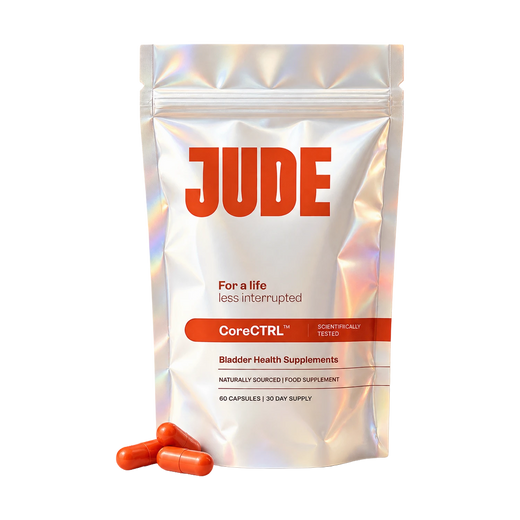
60 capsules - 30 days supply
Feeling caught short more than you'd like, or planning your day around the nearest loo? Jude CoreCTRL™ might be exactly what you're looking for. This science-backed bladder health supplement nourishes the muscles, nerves and tissues your bladder relies on, so you can feel more settled, more confident, and back in control.
Jude CoreCTRL™ is an expert-formulated daily supplement designed to support bladder comfort, control and confidence, particularly for women experiencing changes around midlife and menopause. Its updated formula combines concentrated pumpkin seed extract and soy germ extract with Bifidobacterium lactis, sage, rosemary, zinc and vitamins B3, B6 and D3 to support the muscles, tissues and nerve pathways involved in healthy bladder function.
Rather than focusing on one aspect of bladder health, CoreCTRL™ takes a more complete approach. Vitamin D supports normal muscle function, while vitamins B6 and B3 contribute to normal nervous system function, helping support communication between the brain and bladder. Zinc supports normal protein synthesis and protection from oxidative stress, while Jude uses concentrated pumpkin seed, soy germ, sage and rosemary to provide additional nutritional support for bladder tissue, flexibility and everyday comfort. Jude reports that 82% of women feel a difference within 12 weeks, making consistency an important part of the routine.
CoreCTRL™ is vegan, gluten-free and designed for adults aged 18+. Contains soy and is not suitable for anyone with a soy allergy or intolerance. If you have a medical condition, take medication or have concerns about changes in urinary frequency or bladder function, speak to a healthcare professional. femme Health also recommends consulting your GP and fertility clinic before product use, particularly if you are taking prescribed fertility medication.
Delivery
Returns
View the shipping policy here.
View the returns policy here.
Please note: Orders shipped to Ireland femme will pay the customs charges.
Split your purchase into 3 interest-free payments.
Interest-free. Your exact payment schedule and eligibility are confirmed by Klarna at checkout. Terms apply.
Split your purchase into 4 interest-free payments.
Interest-free. Your exact payment schedule and eligibility are confirmed by Clearpay at checkout. Terms apply.
When you’re trying to conceive, choosing a fertility supplement can feel a bit like online dating; lots of promising profiles, plenty of attractive qualities, but which one is truly “the one” for you? To help cut through the noise, we’ve compared four popular choices; Proceive Max Women, Artah Enhanced Fertility, Proceive Women, and Ovum (Time to Conceive) so you can see how they stack up in terms of ingredients, focus, and best-fit scenarios. Let femme help you to choose the best fertility supplement; we're here to make you feel supported and empowered on your fertility journey. Proceive Max Women: The All-Rounder for Maximum Support If you’re over 35, have been trying for at least 12 months, or simply want the most comprehensive formula on the shelf right now, Proceive Max is like the deluxe, fully-loaded fertility supplement model. What’s inside: A broad amino acid profile (L-Arginine, L-Carnitine, L-Citrulline, L-Glutamine and more) High antioxidant support (CoQ10 70 mg, Vitamin C 400 mg, Vitamin E 200 mg) Methylated folate for optimal supplement absorption A generous spread of minerals (Zinc, Selenium, Magnesium, Calcium, Iron) Why choose it: Best suited for women 35+ or those who’ve been trying to conceive for more than a year Offers the widest nutrient coverage, including lesser-seen amino acids that can support egg quality and hormonal balance Ideal if you prefer a one-and-done fertility supplement sachet rather than multiple pills Artah Enhanced Fertility: The Nutrient Powerhouse with a Wellness Edge Artah’s Enhanced Fertility feels like the “nutritionist-approved” fertility supplement choice, with not just the standard fertility nutrients, but also a whole squad of plant compounds and eye-health carotenoids (hello lutein and zeaxanthin). What’s inside: Choline for cell membrane and brain development support CoQ10 and Alpha Lipoic Acid for mitochondrial and egg health A broad vitamin/mineral base including Vitamin K2, Magnesium, Iodine, and Methylated B vitamins Antioxidants like lutein and zeaxanthin, which may also protect reproductive cells from oxidative stress Why choose it: Great if you’re looking for a fertility supplement that doubles as a comprehensive wellness multi-vitamin Perfect for those who like the idea of additional phytonutrients alongside fertility supplement basics Good choice if you want long-term nutrient coverage from preconception through early pregnancy Proceive Women: The Balanced Starter for Under-35s Think of Proceive Women as Proceive Max’s younger and more relaxed sister; a little lighter on the extra ingredients, but still well-equipped to support fertility and conception for those who don’t need the “max” fertility supplement approach. What’s inside: Core amino acids like L-Arginine and L-Carnitine (lower doses than Max) CoQ10 at a moderate 25 mg Methylated folate, iron, zinc, selenium, and a range of B-vitamins Balanced antioxidant and mineral profile Why choose it: The best fertility supplement for women under 35 with no known fertility concerns Ideal if you want targeted fertility nutrition without going overboard A more budget-friendly fertility supplement option while still covering all key fertility nutrients Ovum (Time to Conceive): The Antioxidant Heavy-Hitter If your fertility focus is all about egg quality, Ovum is the fertility supplement equivalent of a targeted treatment plan. It’s antioxidant-rich, with particular emphasis and research on mitochondrial health and protecting egg cells from oxidative damage. What’s inside: CoQ10 at an impressive 200 mg — one of the highest doses available on the market Alpha Lipoic Acid (600 mg) and N-Acetyl Cysteine (600 mg) for cellular protection Methylated folate, Vitamin C, Vitamin E, zinc, selenium, and other essential fertility nutrients Why choose it: Ideal fertility supplement if you want maximum antioxidant support for egg health Particularly relevant for women over 35, those with a known diminished ovarian reserve, or where oxidative stress is a concern (e.g. certain fertility conditions) A strong choice if you’re already taking a general multivitamin and just want a fertility-focused antioxidant boost How to Choose Between Them Your choice of fertility supplement will come down to your age, fertility history, and personal priorities: 35 or older / TTC for 12+ months: Proceive Max or Ovum are your strongest contenders Looking for a whole-body wellness formula: Artah Enhanced Fertility Under 35 with no known issues: Proceive Women Focused purely on egg quality: Ovum It's important to remember that most fertility supplements offer the building blocks you need for conception and pregnancy; but there are some key differences which mean a particular fertility supplement might work better for your specific fertility journey. Final word on Choosing a Fertility Supplement: Supplements aren’t magic bullets, but the right formulation can help ensure your body has everything it needs to support conception. Whichever fertility supplement you choose, pair it with a balanced diet, good sleep, regular movement, and stress management — because no capsule can replace a healthy lifestyle. Laura Cartwright Laura Cartwright is one of the founders of femme health. Having worked in the diagnostics industry for over 15 years, Laura is passionate about improving women's health, to create an equitable and forward-thinking landscape which proactively supports health outcomes.
Learn moreAn interview between femme and Grace Gordon, founder of FluxxBox Grace, you’ve coined the term “the perfect storm” when talking about menopause and puberty clashing in the same household. Can you explain what you mean by that? "Absolutely. The “perfect storm” is when a mother is going through perimenopause or menopause at the exact time her daughter is starting puberty. It’s this collision of two intense hormonal life stages, one where your oestrogen levels are dropping, and one where hers are skyrocketing. Imagine mood swings, irritability, anxiety, and sleeplessness… on both sides. It’s not just a challenge for our bodies, but for family relationships too." Why do you think this is becoming more common? "There are two main reasons. First, puberty is starting earlier than ever. Second, more women are having children later in life. If you had your daughter in your mid-to-late thirties, by the time she’s hitting puberty, you may be entering perimenopause. So while she’s finding her identity and pushing for independence, you’re trying to navigate the emotional and physical changes that menopause brings. It’s a hormonal overlap that’s not just inconvenient, it can feel overwhelming." What does that actually look like day-to-day? "On a daily basis, it can mean there’s a lot more tension in the house. She’s pulling away because that’s what teens do, she needs to develop her own identity, but at the same time she still needs you as her safe place. Meanwhile, your own hormonal shifts during menopause might make it harder to stay calm, patient, and resilient. You might find yourself snapping more easily, or feeling emotional for no obvious reason. Suddenly there’s a lot more shouting, door slamming, and sometimes even silent standoffs." That sounds exhausting. How do mothers begin to “weather the storm”? "The first step is awareness. Recognise what’s happening, both in your body and in hers. Notice your triggers and be honest about them. When you feel your stress levels rising, try to pause and take deep breaths. Remind yourself that you’re both riding an emotional rollercoaster." Should mothers talk openly to their daughters about menopause? "Yes, but with sensitivity. They may be open to talking about it or may not be in the headspace to hear about your experience at the moment. You could say something like, “I’m going through menopause right now, and my emotions can be a bit all over the place, kind of like what you’re feeling.” This normalises hormonal changes and helps her see that emotions are a natural part of our life cycles. It’s about creating space for mutual understanding." How important is shared activity in this? "Incredibly important. Shared activities create non-confrontational opportunities to connect, (where the focus isn't Puberty or menopause). Exercise together, cook together, or have those brilliant conversations in the car when you’re not making direct eye contact, those can be surprisingly honest moments." Let’s talk about self-care for mothers. Why is that so critical during menopause? Because you cannot pour from an empty cup. If you’re running on fumes, your patience, emotional regulation, and resilience will suffer. During menopause, prioritising good sleep, balanced nutrition, and stress management isn’t indulgence, it’s survival. And your daughter is watching. She learns emotional regulation by seeing you regulate your own. You’ve mentioned that menopause and puberty clashing doesn’t have to be purely negative. How so? Exactly. While being in the middle of The Perfect Storm can feel like chaos, it’s also an opportunity for deeper connection. You’re both going through hormonal transformations, just at opposite ends of the spectrum. You can empathise with her on a unique level, because you understand what it’s like to have your hormones driving your emotions. This can make you a more compassionate and insightful guide for her. Many parents worry about getting “the period talk” right. How can they take the pressure off? That’s why I created FluxxBox, the complete first-period confidence kit. It gives parents a practical, thoughtful way to prepare their daughters for their first period, without the stress of wondering if they’ve covered everything. Menopause can make you feel emotionally and mentally drained, so having a tool that’s ready-made for this milestone can be a lifesaver. What’s inside a FluxxBox? Everything a girl needs to feel confident and prepared, feel-good treats, age appropriate and holistic educational materials, and things to make her feel supported. It’s about giving her the knowledge and tools she needs, so her first period and her cycles are something she understands for life, not something she fears. You’ve spoken about conversation being the starting point for confidence. How does that tie in with your mission? Confidence starts with knowledge, and knowledge starts with conversation. Whether we’re talking about puberty or menopause, silence breeds anxiety. When we create open dialogue in our homes, we help our daughters see these changes as normal, healthy parts of life. For mums who think their daughter might be close to starting her period but aren’t sure, do you have any resources? Yes, we have a free quiz designed for parents to take alongside their daughters. It helps you spot the signs that puberty is progressing and estimate when her periods might begin. It only takes five minutes, but it can make a huge difference in feeling prepared. And during menopause, when your struggling with things like brain fog, a clear, structured tool can be incredibly reassuring. What’s your final piece of advice for mums in menopause navigating this “perfect storm”? Give yourself grace. You’re managing menopause and parenting a child through puberty, and that’s no small feat. Don’t try to be perfect. Focus on connection over perfection. Take breaks when you need them. And remember that both you and your daughter are learning how to navigate big life changes, side by side. Want more support for your daughter? Follow @fluxxbox on Instagram to become part of our growing community of parents and carers all looking for the best way to give their daughters a positive start to their periods. And don't forget to sign up to FLOmail, your weekly dose of period knowledge, advice and trending teen news. For more support for you and menopause follow @femmehealthstore on Instagram where we share our real advice and honest thoughts on our hormonal fluctuations. And sign-up to the Know Your Flow newsletter to get your monthly dose of woman to woman support directly to your inbox. Grace Gordon Grace Gordon is the founder of FluxxBox and mum to two daughters. After her own fertility struggles, she's on a mission to ensure the next generation has a positive start to their period journey and a lifelong understanding of their amazing bodies.
Learn moreEvery year, World IVF Day gives us a chance to pause and talk openly about a journey that millions of women and families go through, often in silence. Behind every fertility appointment, blood test, and medication schedule is something deeply personal: hope. Hope for good news. Hope for the future. Hope for a family. At Femme, that journey is represented by Faye. Faye isn't just a character. She's someone many women will recognise a little of themselves in. She dreams of having her own family one day, and like so many women navigating fertility challenges, she knows that the road to parenthood isn't always straightforward. There are moments when she feels excited and optimistic. There are moments when she feels frustrated, overwhelmed, and tired of waiting. Yet through it all, she continues to show up for herself, her loved ones, and the life she's building in the present while still holding onto her dreams for the future. Faye represents the resilience, patience, and strength that so many women carry every day, especially when their fertility journey isn't going to plan. For some women, that journey may eventually include IVF. What is IVF? IVF (In Vitro Fertilisation) is a fertility treatment where eggs are collected from the ovaries, fertilised with sperm in a laboratory, and then transferred back into the uterus as an embryo. People pursue IVF for many different reasons, including ovulation disorders, blocked fallopian tubes, male-factor infertility, unexplained infertility, age-related fertility challenges, and family building for LGBTQ+ couples and single parents by choice. Even though IVF has become increasingly common, it can still feel overwhelming when you're experiencing it for the first time. Between appointments, medication schedules, and unfamiliar terminology, there can be a lot to process emotionally and physically. If you're considering IVF or are already preparing to start treatment, here's what a typical IVF timeline might look like. The IVF Timeline: What to Expect Week by Week Weeks 1–2: Initial Consultation and Testing The IVF timeline usually begins with a series of tests and consultations. Your clinic may arrange: Blood tests and hormone panels Ultrasound scans Ovarian reserve testing Semen analysis (where applicable) This stage is all about understanding your individual fertility picture and creating a treatment plan tailored to you. Weeks 2–6: Priming Phase (If Required) Some treatment protocols include a priming phase using birth control or other medications. Although it might feel like a delay, this step helps prepare your body and encourages follicles to develop more evenly once stimulation begins. Days 1–12: Ovarian Stimulation This is often the stage people most associate with IVF. Daily hormone injections encourage the ovaries to produce multiple eggs rather than the single egg typically released during a natural cycle. During this time, you'll attend regular monitoring appointments where your clinic tracks follicle growth through blood tests and ultrasound scans. For many women, this can be one of the busiest stages of treatment. Between medication timings, dosage adjustments, and appointments, there's a lot to keep track of. Trigger Shot Once the follicles have reached the ideal size, you'll take a trigger injection to help mature the eggs before collection. Timing is incredibly important at this stage and is usually scheduled 34–36 hours before egg retrieval. Egg Retrieval Egg retrieval is a short procedure typically performed under light sedation. Using ultrasound guidance, eggs are collected directly from the ovaries. Most women return home the same day and spend the next day or two resting and recovering. Days 1–6: Fertilisation and Embryo Development Once collected, the eggs are fertilised in a laboratory. Over the next few days, embryologists carefully monitor embryo development. By days five or six, healthy embryos may reach what's known as the blastocyst stage, when many clinics choose to freeze or transfer them. Embryo Transfer The embryo is transferred back into the uterus either during the same cycle (fresh transfer) or during a later cycle (frozen embryo transfer). The procedure itself is usually quick and relatively painless. The hard part often isn't the transfer—it's the waiting that comes after. The Two-Week Wait If you've ever spoken to someone who has gone through IVF, you've probably heard about the infamous "two-week wait." For many women, this is the most emotionally challenging part of the entire process. Every sensation feels significant. Every day feels longer than normal. Every symptom gets analysed. Every phone notification can bring a wave of anticipation. It's a period where all you can really do is wait and hope. Beta hCG Test Usually around two weeks after embryo transfer, a blood test measures hCG levels to determine whether implantation has occurred. Sometimes additional tests are needed to confirm that hormone levels are rising appropriately. For many women, this is a moment they've been working towards for months or even years. Understanding Your Body Along the Way Fertility journeys often come with a crash course in cycle literacy—and knowing when you ovulate and how your hormones shift can be genuinely empowering, especially through the ups and downs of treatment. Basal body temperature (BBT) tracking confirms ovulation and reveals hormonal patterns by capturing the subtle temperature rise post-ovulation and dip before your period. The catch? Traditional BBT tracking demands rigid discipline—same wake time daily, temperature taken before you move, speak, or even think. One missed morning and your data suffers. During an already demanding IVF timeline, that kind of pressure is the last thing you need. A Smarter Way to Track Tempdrop takes that burden off your plate. This comfortable wearable works while you sleep, continuously monitoring temperature overnight and syncing automatically—no alarms, no perfect routines, no anxiety over a restless night or early appointment throwing off your chart. Built on proven BBT science, Tempdrop's smart algorithm filters out disturbances and adapts to irregular schedules, so you still get reliable data even when IVF's early mornings, medication side effects, and unpredictable days make consistency hard. When so much of the process already feels out of your hands, having a clearer, effortless window into your cycle can offer something invaluable: a little more confidence and control along the way. The Part People Don't Always Talk About While IVF timelines follow a medical timeline, fertility journeys rarely follow an emotional one. That's why Faye's story feels so important. Like many women, Faye is learning that fertility isn't something you can simply schedule or control. It's a journey that often requires patience, resilience, and self-compassion. Some days she feels hopeful. Some days she feels exhausted by the waiting. Some days she wonders if everyone around her seems to be moving forward while she remains stuck in place. And that's completely normal. The reality is that fertility journeys aren't defined by appointment dates, ovulation charts, or treatment milestones alone. They're defined by the courage it takes to keep believing in your future, even when the path isn't clear. Faye reminds us that it's possible to hold hope and uncertainty at the same time. To dream about tomorrow while still embracing today. To Every Woman Navigating Fertility Challenges This World IVF Day, we're thinking about every woman who is trying to conceive, undergoing treatment, waiting for answers, grieving setbacks, celebrating milestones, or simply taking things one day at a time. Whether your journey includes IVF or not, your experience is valid. Like Faye, you are allowed to dream about the future while still embracing the life you're living today. You are allowed to feel hopeful and vulnerable at the same time. You are allowed to have difficult days. And most importantly, you are not alone.


Learn moreChat with our team. Available from 9am - 5pm, Monday - Friday.
Learn more about our team, values, and approach.