When you’re trying to conceive, choosing a fertility supplement can feel a bit like online dating; lots of promising profiles, plenty of attractive qualities, but which one is truly “the one” for you?
To help cut through the noise, we’ve compared four popular choices: Proceive Max Women, ARTAH Enhanced Fertility, Proceive Women and OVUM, so you can see how they differ in formulation, focus and format.
One important caveat before we start: a fertility supplement cannot guarantee conception or improve fertility simply because it contains more ingredients. Our guide to preconception health covers the wider picture, while NHS advice centres on essentials including folic acid and vitamin D. Any additional supplement should be considered in the context of your diet, medicines, health history and professional advice.
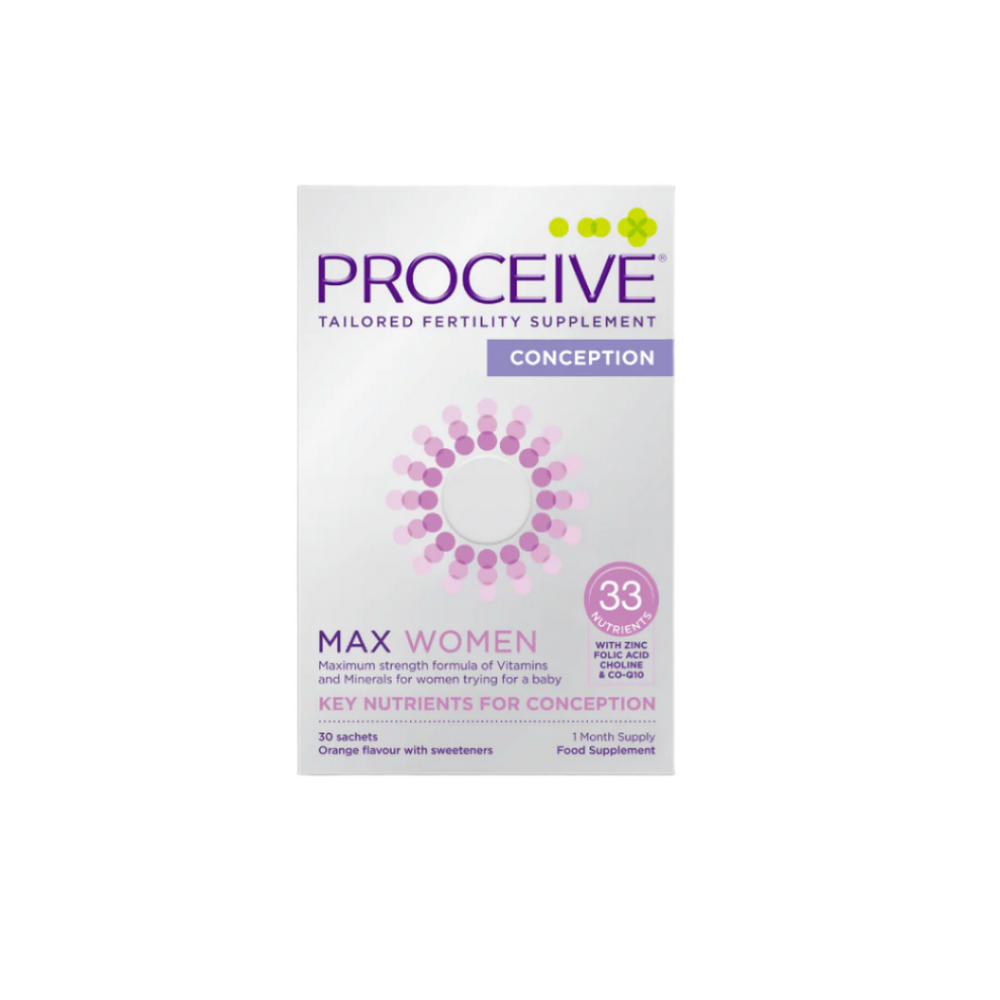
Proceive Max Women: the broader-formula option
Proceive Max Women is positioned as the more comprehensive formula in the Proceive range and combines vitamins, minerals, amino acids and other nutrients in a daily sachet-and-capsule format.
Why you might choose it:
- You prefer a broad fertility supplement formula rather than several separate products
- You want a product specifically positioned for women aged 35+
- You are happy with a higher-complexity daily formulation
Age alone does not make one fertility supplement medically “best”, and being over 35 or trying for more than a year is also a reason to think about fertility assessment rather than relying on supplements alone.
VIEW PROCEIVE MAX
ARTAH Enhanced Fertility: fertility nutrition with a wider wellness focus
ARTAH Enhanced Fertility combines a broad vitamin and mineral base with additional nutrients including choline and antioxidant compounds. It is designed as a preconception-focused nutritional formula rather than a treatment for infertility.
Why you might choose it:
- You want a fertility supplement with a broad micronutrient profile
- You like ARTAH’s whole-body nutrition approach
- You prefer a capsule-based formula
Claims around “egg health”, mitochondrial support or oxidative stress should not be read as a promise that a supplement will improve egg quality or increase the chance of pregnancy.
VIEW ARTAH
Proceive Women: the simpler Proceive option
Think of Proceive Women as Proceive Max’s lighter sibling: it still combines key vitamins, minerals and selected amino acids, but without the same breadth as Max.
Why you might choose it:
- You want a dedicated preconception fertility supplement without the Max formulation
- You prefer a straightforward 30-day product
- You want to stay within the Proceive range at a lower price point
We would not describe it as automatically “the best fertility supplement for women under 35”. The right choice depends on your individual needs, diet and any advice you have received from a healthcare professional.
VIEW PROCEIVE WOMEN
OVUM: a preconception formula with an antioxidant focus
OVUM’s Pre-Conception Supplement puts particular emphasis on nutrients commonly discussed in fertility and preconception nutrition, including CoQ10 and antioxidant compounds, alongside vitamins and minerals.
Why you might choose it:
- You want a fertility supplement with an antioxidant-heavy formulation
- You prefer OVUM’s preconception-focused range and format
- You want to compare its nutrient profile against a broader multinutrient formula
Antioxidant ingredients are not the same thing as proven improvement in egg quality or natural conception, so we would not use ovarian reserve, age or a fertility diagnosis on its own to prescribe this as the “right” product.
VIEW OVUM
Proceive Max vs Proceive Women, ARTAH and OVUM: quick comparison
If the reason you are comparing formulas is age, ovarian reserve or a longer-than-expected time to pregnancy, it is worth separating nutrition from fertility assessment. Our guide to AMH and ovarian reserve explains what AMH can and cannot tell you, while egg and sperm quality looks at the wider reproductive picture.
What is the difference between Proceive Women and Proceive Max Women?
Both are preconception supplements, but Proceive Max Women is the broader formula with a larger nutrient profile, while Proceive Women is a simpler option. More ingredients do not automatically make a supplement more appropriate, so compare the label with your diet, medicines and any advice from your healthcare professional.
Where does ARTAH Enhanced Fertility fit?
ARTAH Enhanced Fertility takes a wider nutrition-and-wellness approach while still being positioned for preconception support. If ARTAH is the brand you are specifically researching, compare its full ingredient list rather than judging it on one headline nutrient.
How is OVUM different?
OVUM's formula places more emphasis on antioxidant-focused preconception nutrition. As with the other products here, it should sit alongside the core NHS preconception advice on folic acid, vitamin D and general health rather than being treated as a fertility treatment.
How to choose between fertility supplements
If supplements are only one part of a bigger TTC question, our guide to a fertility consultation with your GP explains when testing may be appropriate. You can also use the femme Fertility Chapter to move from general preconception information into the relevant support, tracking and testing pathways.
Your choice of fertility supplement should come down to what you actually need rather than which label has the longest ingredient list. If you want to compare supplements with the wider range of tools and support available while trying for a baby, browse our Trying to Conceive collection.
- Start with preconception essentials: NHS guidance recommends 400 micrograms of folic acid daily while trying to conceive and through the first 12 weeks of pregnancy, with higher doses advised in some circumstances. Vitamin D is also recommended.
- Compare the whole label: avoid accidentally doubling up nutrients across multiple multivitamins or supplements.
- Check pregnancy suitability: avoid supplements containing vitamin A in the retinol form when pregnant or trying to conceive unless specifically advised.
- Get medical advice when it matters: if you have been trying for a year without conceiving, or sooner if you are 36 or over or have another fertility concern, speak to your GP rather than trying to supplement your way around a possible fertility issue.
Final word on choosing a fertility supplement
Supplements aren’t magic bullets. A well-chosen fertility supplement can help cover specific nutritional needs, but no capsule can guarantee conception or replace medical assessment when it is needed.
Whichever option you choose, pair it with the basics that genuinely matter: a balanced diet, folic acid, vitamin D, avoiding smoking and alcohol when trying to conceive, and getting individual advice where your health history calls for it.

Laura Cartwright
Laura Cartwright is one of the founders of femme health. Having worked in the diagnostics industry for over 15 years, Laura is passionate about improving women's health, to create an equitable and forward-thinking landscape which proactively supports health outcomes.