


Tempdrop vs Mira: two different ways to track fertility
Tempdrop and Mira are both used for fertility and cycle tracking, but they measure different biological signals. Tempdrop is a wearable that collects temperature data while you sleep. Mira uses urine tests and an analyser to measure fertility-related hormone patterns.
That means this is not a simple comparison between two versions of the same device. The more useful question is whether you want passive overnight temperature tracking or active at-home hormone testing, and what information you want from your cycle.
Transparency: femme sells Tempdrop and does not sell Mira. We have therefore kept this comparison focused on the manufacturers' current product information and the practical differences between the two approaches.
What does Tempdrop measure?
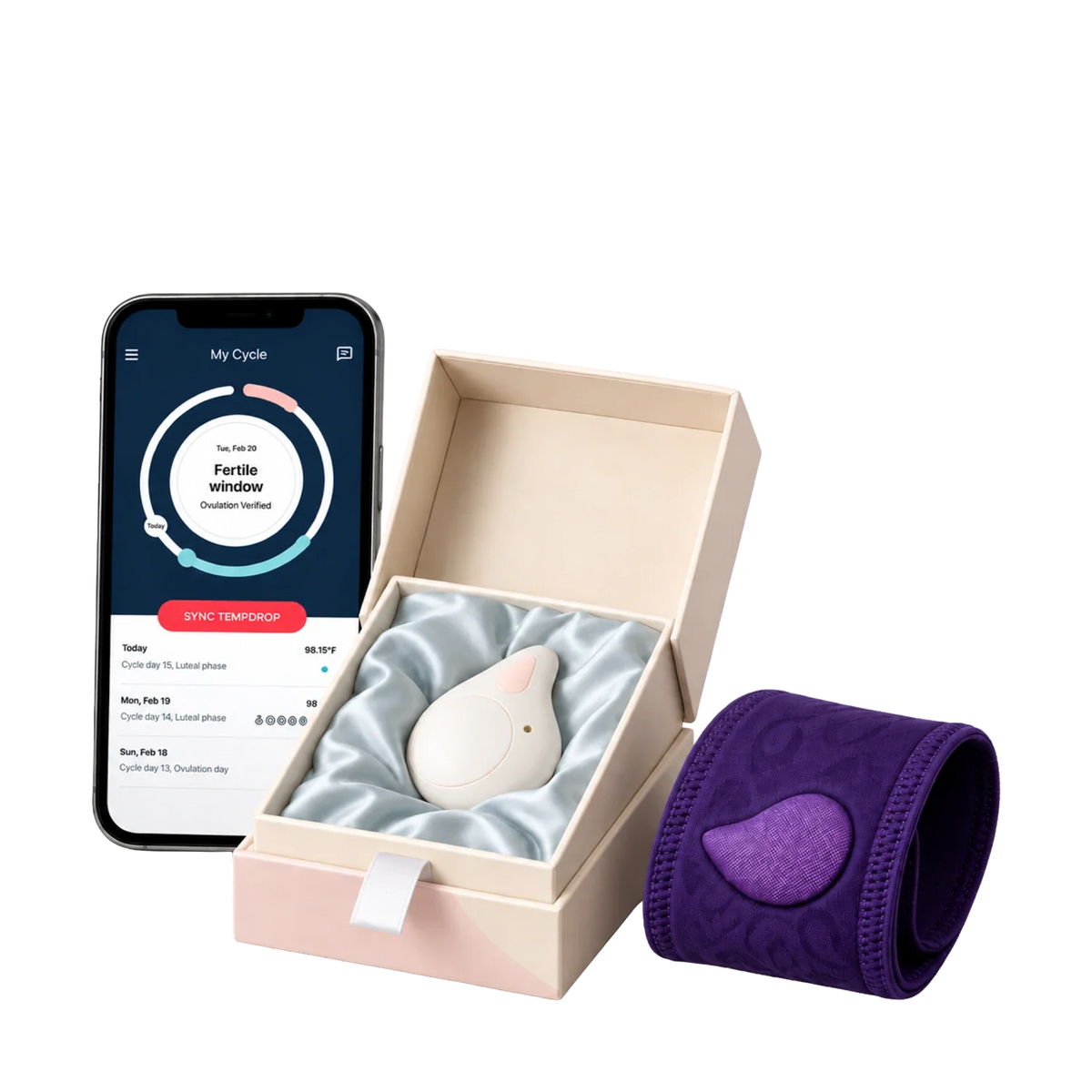
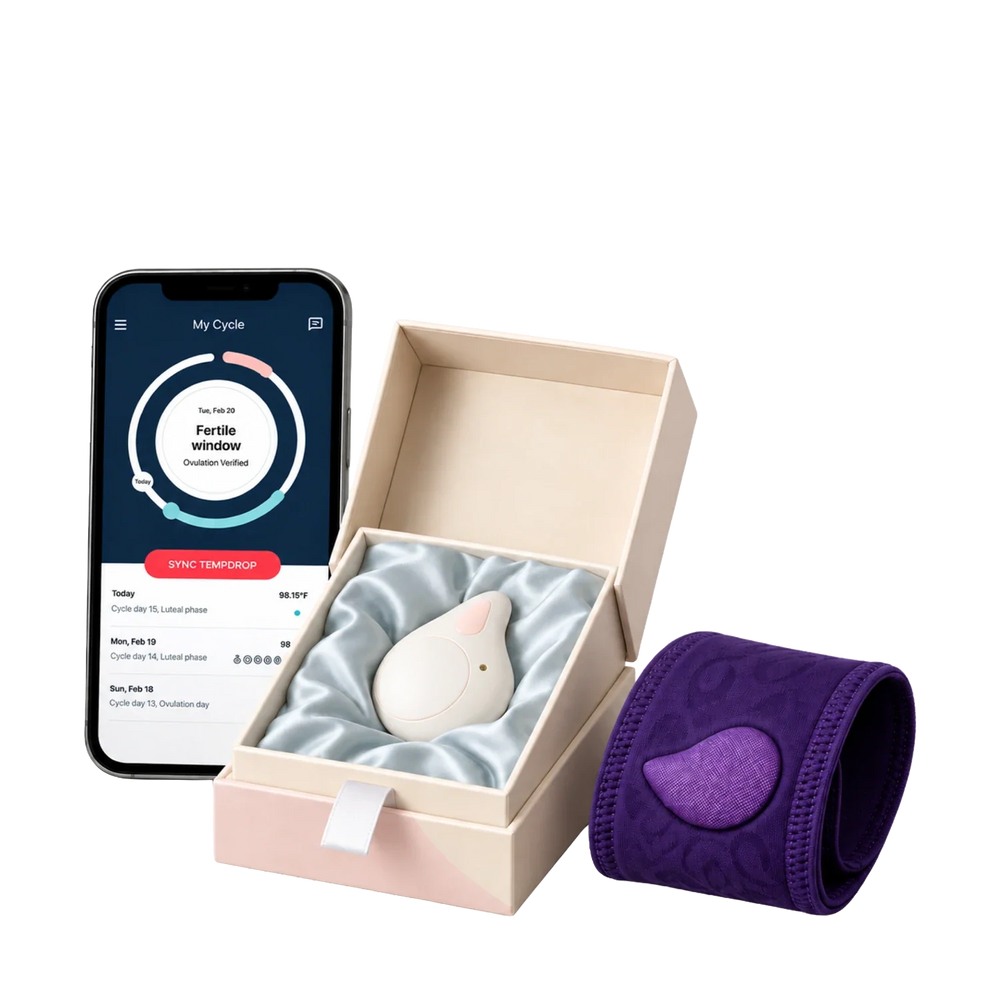
Tempdrop is worn on the upper arm while you sleep. It collects overnight temperature and movement data, then processes those data into a nightly temperature value for cycle charting.
The temperature rise associated with progesterone after ovulation means BBT-style tracking is especially useful for identifying a sustained post-ovulation shift. Tempdrop's app can also provide cycle and fertile-window predictions, but predictions are estimates. The temperature signal itself becomes most informative after ovulation has occurred.
Its practical advantage is automation. You do not need to wake at the same time each morning and take a manual thermometer reading before moving. That can suit shift workers, parents, interrupted sleepers and anyone who finds a strict morning BBT routine difficult.
For the underlying science, see our complete guide to BBT tracking.
What does Mira measure?
Mira takes a different approach. Its analyser reads disposable urine-test wands and sends the results to the Mira app. Depending on the Mira kit and wand in use, the system can measure fertility-related markers including LH, E3G, PdG and FSH. Mira's Ultra4 system measures all four within one test.
These signals can provide information at different points in the cycle. E3G, a urinary estrogen metabolite, can rise before ovulation. LH can help identify the surge associated with approaching ovulation. PdG, a urinary progesterone metabolite, can be used to follow the post-ovulation progesterone pattern. FSH adds another hormone trend to the wider picture.
Because hormone changes can appear before the temperature rise, Mira can provide earlier fertile-window information than BBT alone. It requires a more active routine, however: collecting urine, using the appropriate wand and testing on the schedule recommended by the app.
Tempdrop vs Mira: side-by-side
Tempdrop
Measures: overnight temperature and movement data for BBT-style cycle tracking.
Routine: wear the sensor on the upper arm while sleeping, then sync it with the app.
Best at: passive long-term temperature collection and recognising post-ovulation temperature patterns.
Ongoing consumables: no daily test wands.
App: free core app with optional Premium features.
Mira
Measures: urinary hormone markers, with available wands covering LH, E3G, PdG and FSH.
Routine: collect a urine sample, dip the wand, insert it into the analyser and follow the app's testing schedule.
Best at: seeing quantitative hormone patterns around the fertile window and after ovulation.
Ongoing consumables: replacement test wands are required.
App: results and hormone trends are displayed in the Mira app.
Which gives you earlier information about ovulation?
If your main question is when fertility may be approaching, urine hormone tracking has an inherent timing advantage over temperature alone. Estrogen-related changes and the LH surge happen before the sustained post-ovulation temperature rise.
If your main question is whether an ovulatory temperature shift appears to have happened, BBT remains useful because the sustained rise is a retrospective sign. Tempdrop automates the collection of that temperature pattern.
Neither approach identifies the exact moment an egg is released, and neither should be treated as a stand-alone medical diagnosis.
Which is easier to use every day?
This depends heavily on your routine.
Tempdrop may suit you if...
- you want data collection to happen while you sleep
- your wake time changes from day to day
- you have interrupted sleep or work shifts
- you want to avoid repeated urine testing
- you already understand or want to learn BBT-style charting
Mira may suit you if...
- you specifically want to see urinary hormone trends
- you want information that can begin before the post-ovulation temperature rise
- you are comfortable testing urine on scheduled days
- you are comfortable buying replacement wands
- you prefer numerical hormone readings in an app
Tempdrop vs Mira for irregular cycles and PMOS
Irregular cycles can make calendar-only predictions less useful because ovulation may not occur on the same cycle day each month. Both Tempdrop and Mira can add biological data rather than relying only on calendar averages, but they do it differently.
Tempdrop can help you see whether a sustained temperature shift appears across a variable-length cycle. Mira can show urine hormone patterns around the fertile window and after suspected ovulation.
Neither device diagnoses PMOS, formerly known as PCOS, or explains why a cycle is irregular. Persistent irregularity, absent periods, significant symptoms or fertility concerns deserve appropriate clinical assessment.
What about cost over time?
The cost structure is different, even before individual prices are compared.
Tempdrop is primarily a reusable sensor purchase. The core app is available without a paid subscription, while Premium is optional for additional interpretation and features.
Mira requires an analyser plus compatible disposable test wands. Mira says its app typically recommends around 10 to 20 wands per cycle, although the exact schedule varies. That means consumables form part of the ongoing cost of hormone testing.
Prices, bundles and subscriptions can change, so compare the current total cost for the way you expect to use each system rather than looking only at the initial device price.
Can you use Tempdrop and Mira together?
Potentially, because they measure different signals. A person could use urine hormone information to observe the approach to ovulation and temperature to add retrospective confirmation afterwards.
That does not mean everybody needs both. More data can also mean more cost, more testing and more information to interpret. If one method already answers the question you are trying to solve, adding another device may not improve the decision you can make from the data.
If you are trying to conceive and want to understand how temperature fits alongside earlier fertility signs, see our guide to using Tempdrop when TTC.
Where Tempdrop fits
Tempdrop is the option femme stocks. It is designed for people who want automated overnight BBT-style tracking without structuring every morning around a thermometer.
If that matches the information and routine you want, you can view the current device, sizing and purchase options below.
VIEW TEMPDROP
Tempdrop vs Mira: quick questions
Is Mira more accurate than Tempdrop?
There is no useful single accuracy percentage that makes these devices directly interchangeable because they measure different biological signals. Mira measures urinary hormone markers. Tempdrop tracks an overnight temperature pattern. Choose based on the information you need rather than treating them as two versions of one test.
Is Mira better for predicting ovulation?
Urinary E3G and LH changes can provide information before the post-ovulation temperature rise, so Mira can offer earlier fertile-window signals than BBT alone. Tempdrop's app can provide predictions, but the temperature shift itself is mainly retrospective.
Is Tempdrop better for confirming ovulation?
Tempdrop is designed to make long-term temperature tracking easier and its app includes ovulation confirmation tools. A sustained temperature rise can support retrospective confirmation that ovulation probably occurred. It does not prove an exact ovulation time or diagnose a fertility condition.
Do either of them work as contraception?
Do not assume that owning a fertility tracker makes it a contraceptive method. If pregnancy prevention is your goal, use an appropriate contraceptive method or follow the rules of a validated fertility-awareness method with suitable instruction.
The bottom line
Choose Tempdrop if your priority is convenient, passive overnight temperature tracking. Choose Mira if your priority is seeing urinary hormone patterns and you are comfortable with scheduled testing and ongoing test wands.
For many people, the deciding factor will be less about which device has more data and more about which biological signal answers their question and which routine they can maintain consistently.
If you are still choosing between temperature methods, our BBT wearables vs thermometers guide explains the alternatives.
Sources and product information
This comparison was checked against current manufacturer information available in October 2026. Product features can change.


