Skip to content
In stock
60 Capsules. 1 Month Supply
Preparing for pregnancy and want to make sure your nutrition's covering all the bases? Proceive® Conception Omega 3 is here to help. Omega-3 fatty acids play a vital role in every cell of the body, including the sperm and egg cells developing as you prepare for conception. This high-strength fertility supplement delivers pure EPA and DHA in the ideal ratio to support both you and your partner on the journey ahead.
Why Omega 3 matters for fertility
Omega-3 fatty acids are essential building blocks for every cell in the body, including the sperm and egg cells developing and maturing in the run-up to conception. Because your body can't make these fats on its own, getting enough from food or a supplement matters more than ever during this stage, especially if oily fish isn't a regular part of your diet.
Built on the ideal ratio
Each daily dose delivers 2,000mg of fish oil, providing 660mg EPA and 440mg DHA, a 3:2 ratio that mirrors what's seen in the scientific research on reproductive health.
Clean, sustainable sourcing
The oil comes from sustainably caught anchovies off the South American coast, certified by Friend of the Sea, and is free from PCBs and heavy metals, so you're getting a pure, responsibly sourced source of omega-3 alongside your fertility routine.
For both partners
Proceive Conception Omega 3 is suitable for both women and men trying to conceive, and can be taken alongside Proceive® Men's Fertility Supplement and Proceive® Women Fertility Supplement.
Quantity: 60 Capsules
Delivery
Returns
View the shipping policy here.
View the returns policy here.
Please note: Orders shipped to Ireland femme will pay the customs charges.


Split your purchase into 3 interest-free payments.
Interest-free. Your exact payment schedule and eligibility are confirmed by Klarna at checkout. Terms apply.
Split your purchase into 4 interest-free payments.
Interest-free. Your exact payment schedule and eligibility are confirmed by Clearpay at checkout. Terms apply.
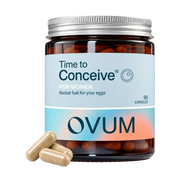
Eggs. We all know they’re part of the fertility equation, but how much do we really know about egg health? We talk a lot about timing ovulation, tracking hormones, and optimising sperm, but egg health deserves a headline of its own. Whether you’re trying to conceive now or just thinking ahead, understanding what affects your eggs, and what you can actually do to support them, can make fertility feel a little less mysterious and a lot more empowering. Here’s what you need to know. Welcome to The Ultimate Egg Health Guide Learn what egg count (ovarian reserve) really means Understand how egg quality affects fertility Discover what AMH testing can tell you Explore what affects egg health over time Find out when egg freezing might be worth considering No overwhelm. No jargon. Just facts, clarity, and your next best step. DOWNLOAD NOW Egg Health 101: Count vs. Quality First things first: egg count and egg quality are not the same thing. Egg count, your ovarian reserve, is about how many eggs you have left. You’re born with all the eggs you’ll ever have, around 1–2 million, and that number steadily declines over time. Egg quality is about how healthy those eggs are, especially their DNA and ability to develop into a healthy embryo. Quality naturally declines with age, particularly after 35, but it’s also influenced by your overall health, lifestyle, environment, and hormones. So yes, age matters. But it’s not the whole story. And there are things you can do to support egg quality, even if you can’t increase the number of eggs you have. Your Egg Health is a combination of egg reserve and egg quality. What Is Ovarian Reserve? Ovarian reserve refers to the number of eggs left in your ovaries. While there’s no way to count them directly, doctors use hormone tests and ultrasound to estimate your reserve. A lower ovarian reserve doesn’t automatically mean you can’t get pregnant, and a higher reserve doesn’t guarantee it. It’s one piece of the fertility puzzle. AMH Testing, Explained Simply AMH (Anti-Müllerian Hormone) is produced by the small follicles in your ovaries. A simple blood test can check your AMH level and give you a rough estimate of your ovarian reserve. A higher AMH usually means more follicles. A lower AMH may suggest fewer eggs remaining. But AMH doesn’t measure egg quality, and it doesn’t predict your chances of natural conception. It’s best used as a guide, not a verdict. A few numbers worth knowing: AMH typically peaks in your late teens to early 20s. It declines slowly through your 20s and more rapidly after 35. By 37, many women have around 25,000 eggs left, compared to the 1–2 million they started with. It’s a useful clue, but not the full picture. A few numbers worth knowing: AMH typically peaks in your late teens to early 20s. It declines slowly through your 20s and more rapidly after 35. By 37, many women have around 25,000 eggs left, compared to the 1–2 million they started with. What Affects Egg Quality? Egg quality naturally declines with age, but that’s not the only factor. Your eggs are sensitive to what’s happening in your body and your environment. Things like stress, smoking, excess alcohol, poor nutrition, lack of sleep, and chronic inflammation can all affect how well your eggs function. The good news? While you can’t stop time, you can support the health of your eggs by focusing on the key 90-day window before ovulation, the time when an egg is maturing and getting ready for release. Nutrition for Egg Quality A balanced diet is one of the most effective ways to support egg health. That means whole foods, plenty of colourful fruit and veg, and nutrients linked to antioxidant protection, hormone function, and cell health. Some key nutrients include: CoQ10 – Supports cellular energy and mitochondrial function. Omega-3s – Help reduce inflammation and support hormone production. Folate – Essential for DNA synthesis and early embryo development. Zinc and Selenium – Support antioxidant defence and reproductive health. Vitamin D – Plays a role in hormone regulation and ovulation. This is where a well-formulated fertility supplement can help to fill any nutritional gaps. OVUM - Time to Conceive, for example, is designed with this 90-day window in mind, combining antioxidants and key nutrients to support egg health, ovulation, and fertility. 👉 Shop the Ovum Time to Conceive supplement here Because knowing your eggs deserves more than a blog post. Join us in raising awareness and celebrating Egg Health Week with this exclusive offer: 🥚 10% off all products in our Egg Health collection Just use the code: KNOWYOUREGGS at checkout. When Should You Think About Egg Freezing? Egg freezing isn’t just for “later”. It’s about giving yourself options, especially if you’re not ready for a baby now, or if medical treatments or conditions could affect your fertility in the future. It’s worth considering if: You’re in your late 20s or early 30s and don’t plan to try for a baby for a few years You have a lower AMH or a family history of early menopause You’re about to undergo chemotherapy or surgery that could impact your ovaries You have conditions like endometriosis that can affect egg quality or quantity The earlier you freeze, generally the better the outcomes, but it’s a very personal decision. Speaking with a fertility specialist can help you understand whether it’s the right choice for you. Life Beyond Fertility Planning Egg health isn’t only about trying to get pregnant, it’s also a reflection of your wider wellbeing. Hormones, sleep, stress, blood sugar, and nutrition all connect back to how your body functions, and supporting them now can benefit you well into the future. 👉 Want to understand your cycle better, too? Try a Tempdrop Cycle Tracker Tempdrop is a wearable sensor that tracks your basal body temperature (BBT) while you sleep, giving you valuable insight into ovulation and your cycle without the daily 6am thermometer routine. It pairs with a smart app that learns your body over time, helping you see when and if you’re ovulating, spot cycle changes, and feel more in tune with what’s going on hormonally. Whether you're trying to conceive or simply want to understand your cycle better, Tempdrop can be a helpful tool for fertility tracking, hormone awareness, and peace of mind. SHOP TEMPDROP Final Thoughts You may not be able to change your egg count, but there’s a lot you can do to support your egg quality and overall fertility. Eat well. Rest. Move. Get curious about your hormones. And don’t wait until you’re “ready” to start learning what your body’s been trying to tell you all along. Because egg health is about more than fertility. It’s about understanding, supporting, and investing in your future. Want to learn more? Download our free Egg Health Guide here.
Learn moreHow Long Does It Take to Improve Hormone Health and Fertility? When it comes to hormone health and fertility, one of the first questions I’m often asked is: “How long will it take before I see results?” The honest answer? It takes time, because your body works in beautiful, natural cycles. Why 3 months really matters The eggs you ovulate today actually began developing about three months ago. It takes roughly 90–100 days for an egg to mature before it’s ready for ovulation. So the lifestyle choices, stress levels, supplements, and acupuncture sessions you have now are influencing the egg you’ll release in three months’ time. You’re born with all the eggs you’ll ever have — you can’t create new ones — but what you can change is the environment those eggs develop in. Through acupuncture, nutrition, and reducing stress, you can improve blood flow, oxygenation, and hormonal balance, creating the best possible conditions for your eggs to mature and ovulate. You can also influence the uterine environment — ensuring your endometrial lining is thick, healthy, and receptive, ready to support implantation and early pregnancy. That’s why I recommend allowing at least 3–4 menstrual cycles when addressing hormonal or fertility issues. This gives your body time to rebalance, your hormones to regulate, and your reproductive system to respond. Acupuncture works with your body’s rhythm Acupuncture supports the body through these cycles, helping to: Improve blood flow to the ovaries and uterus Support healthy ovulation and implantation Balance hormones like oestrogen, progesterone, and FSH Reduce stress and calm the nervous system Improve sleep, digestion, and energy — all vital for fertility However, acupuncture isn’t a “quick fix.” Just as it takes three months to nurture an egg, it takes several cycles for acupuncture to create lasting changes in your hormonal patterns and reproductive health. Over these weeks, acupuncture gently retrains your body to function in a more balanced way — regulating cycles, improving flow, reducing PMS, and supporting better-quality eggs. Conditions acupuncture can help with Acupuncture can support a wide range of hormonal and fertility-related conditions, including: Irregular or absent periods (amenorrhoea) Painful or heavy periods (dysmenorrhoea, menorrhagia) Polycystic Ovary Syndrome (PCOS) and Polycystic Ovaries (PCO) Endometriosis High FSH or low AMH Unexplained infertility Thin or poor-quality endometrial lining Luteal phase defect or short cycles Recurrent miscarriage Thyroid-related fertility issues Perimenopause and menopause symptoms such as hot flushes, anxiety, insomnia, and mood swings Whether the issue lies with ovulation, egg quality, hormone imbalance, or stress, acupuncture works to restore communication between the body’s key systems — helping you feel more balanced, calm, and in tune with your natural cycle. The stress–hormone connection One of the most powerful (and often overlooked) influences on fertility is stress. When we’re under constant stress, our brain shifts into “survival mode.” The hypothalamus and pituitary gland, which act as your body’s hormonal control centres, reduce communication with the ovaries — known as the hypothalamus–pituitary–ovarian (HPO) axis. This can delay or even suppress ovulation, affect hormone levels, and disrupt your cycle. Acupuncture helps calm the stress response, balance cortisol, and restore that vital communication between brain and ovaries — allowing your body to return to a more regular rhythm. Many women notice more consistent cycles, improved mood, and better sleep once stress levels begin to settle. Don’t forget about sperm health Coincidentally, sperm also follows a similar timeframe. Although sperm are made fresh every day, it takes around three months for sperm to fully mature. That means the steps your partner takes now — through acupuncture, supplements, nutrition, and lifestyle — will influence the quality of his sperm three months down the line. Supporting both partners together often leads to much better fertility outcomes. Track your progress with BBT During this time, tracking your Basal Body Temperature (BBT) can be a wonderful tool. By noting your temperature daily, you can start to see clear signs of ovulation, hormone shifts, and improvements in your cycle health. Many of my patients find it empowering to actually see the changes happening as their charts become more balanced. See Product Supplements and self-care for three months These same three months are also the perfect window to support your body with good-quality supplements, nourishing foods, and restorative rest. Think of it as a 90-day investment in your future fertility and hormone health. Every acupuncture session, every supplement, and every good night’s sleep adds up to the changes you’ll see in a few months’ time. Find the perfect fertility supplement for you Menopause and hormonal balance take time too The same principle applies to perimenopause and menopause. Hormonal shifts during this stage don’t happen overnight — and neither does balance. Acupuncture helps ease symptoms like hot flushes, night sweats, anxiety, poor sleep, and mood changes, but it works best when given time to regulate your body’s feedback systems. With consistency, patience, and care, most women notice gradual, sustainable improvements rather than quick, short-lived fixes. Patience brings results Whether you’re trying to conceive, regulate your periods, or manage menopause symptoms, patience and consistency are key. Just as you wouldn’t expect to feel fit after one visit to the gym, your hormonal system also needs time to respond and reset. By committing to 3–4 cycles of acupuncture, tracking your cycle, supporting yourself with the right supplements, and giving your body space to heal, you’re laying the foundations for lasting hormonal balance and fertility health. Your body is always working for you — sometimes, it just needs the time and support to show it. Thank you Ilana Thank you so much, Ilana, for sharing your insight, wisdom, and guidance on why the first three months truly matter. Your thoughtful perspective and expertise have made this blog possible, and your voice brings clarity, inspiration, and encouragement to every reader. I’m deeply grateful for your generosity in contributing your knowledge and for helping others recognize the power of patience, consistency, and self-trust. About Acupuncture in St Albans | Holistic Healing | Acupuncture by Ilana Ilana Garsin Ilana GarsinI has been an acupuncturist for over 15 years working from her lovely garden clinic in the village of Bricket Wood, in St Albans, just 5 minutes from Radlett and easily accessible from the M25, M1, A414 and A405.Although llana work's with patients with a variety of issues, She has a special interest in fertility, pregnancy menopause and pain management.
Learn moreFertility isn’t just about timing it’s about quality. During National Fertility Awareness Week, we’re shining a light on one of the most overlooked aspects of conception: egg and sperm health. Whether you’re actively trying to conceive or planning for the future, understanding how lifestyle, nutrition, and targeted supplementation affect reproductive cells can make a big difference. Why Egg Quality Matters A woman is born with all the eggs she will ever have around one to two million. Over time, that number and quality naturally decline. By the mid-30s, fewer eggs are released, and the likelihood of chromosomal abnormalities increases, which can affect conception and pregnancy outcomes. The good news? Egg quality can be supported with lifestyle changes and fertility-focused supplements. Tips to Support Egg Health Nourish your body: Antioxidants like vitamins C and E, selenium, and CoQ10 protect eggs from oxidative stress. Balance blood sugar: Whole foods, lean proteins, and healthy fats stabilise hormones and support ovulation. Reduce toxins: Limit alcohol, smoking, and environmental toxins like BPA. Prioritise rest & stress management: Chronic stress can impact ovulation and hormonal balance. Supplements like Ovum are designed to provide essential vitamins, minerals, and antioxidants to support egg quality and reproductive health. Femme Health Pre-Conception & Ovulation Support Supplement, formulated to nourish your body for conception. Sperm Health: More Than Just Count Sperm quality isn’t only about quantity it’s about motility (movement), morphology (shape), and DNA integrity. Research shows that sperm health can change within about three months, as that’s how long new sperm take to develop. Ways to Boost Sperm Quality Maintain a healthy weight: Excess body fat can affect testosterone and sperm production. Fuel up: Zinc, folate, vitamin D, and omega-3s support sperm quality. Stay cool: Avoid excessive heat from laptops or saunas on the lap area. Cut back on toxins: Smoking, heavy alcohol use, and recreational drugs can harm sperm DNA. The Power of Preconception Care Preconception health isn’t just for those ready to conceive today it’s a form of body literacy. Understanding your fertility empowers you to make informed choices about your health, family planning, and overall wellbeing. Consider fertility testing or consultations to learn more about: Ovarian reserve testing (AMH, FSH, AFC) Semen analysis Hormone balance panels Nutritional and lifestyle assessments Supplements like Ovum Femme Health Pre-Conception & Ovulation Support can complement these lifestyle and testing strategies, providing targeted nutrients to support both egg and sperm quality. Key Takeaway Both Egg & Sperm Quality are vital to conception, and both can be nourished through lifestyle, diet, and supplementation. Nutrition, stress management, and targeted vitamins play powerful roles in protecting reproductive health. This National Fertility Awareness Week, let’s normalise conversations around fertility because awareness is the first step to empowerment. Because fertility health is whole-body health.
Learn moreChat with our team. Available from 9am - 5pm, Monday - Friday.
Learn more about our team, values, and approach.