The upper arm is not an arbitrary place to wear a temperature tracker
Temperature is not identical everywhere on the body. The value recorded at the mouth, wrist, finger, skin surface or underarm depends on the measurement site, the surrounding environment and the way the device collects and interprets data.
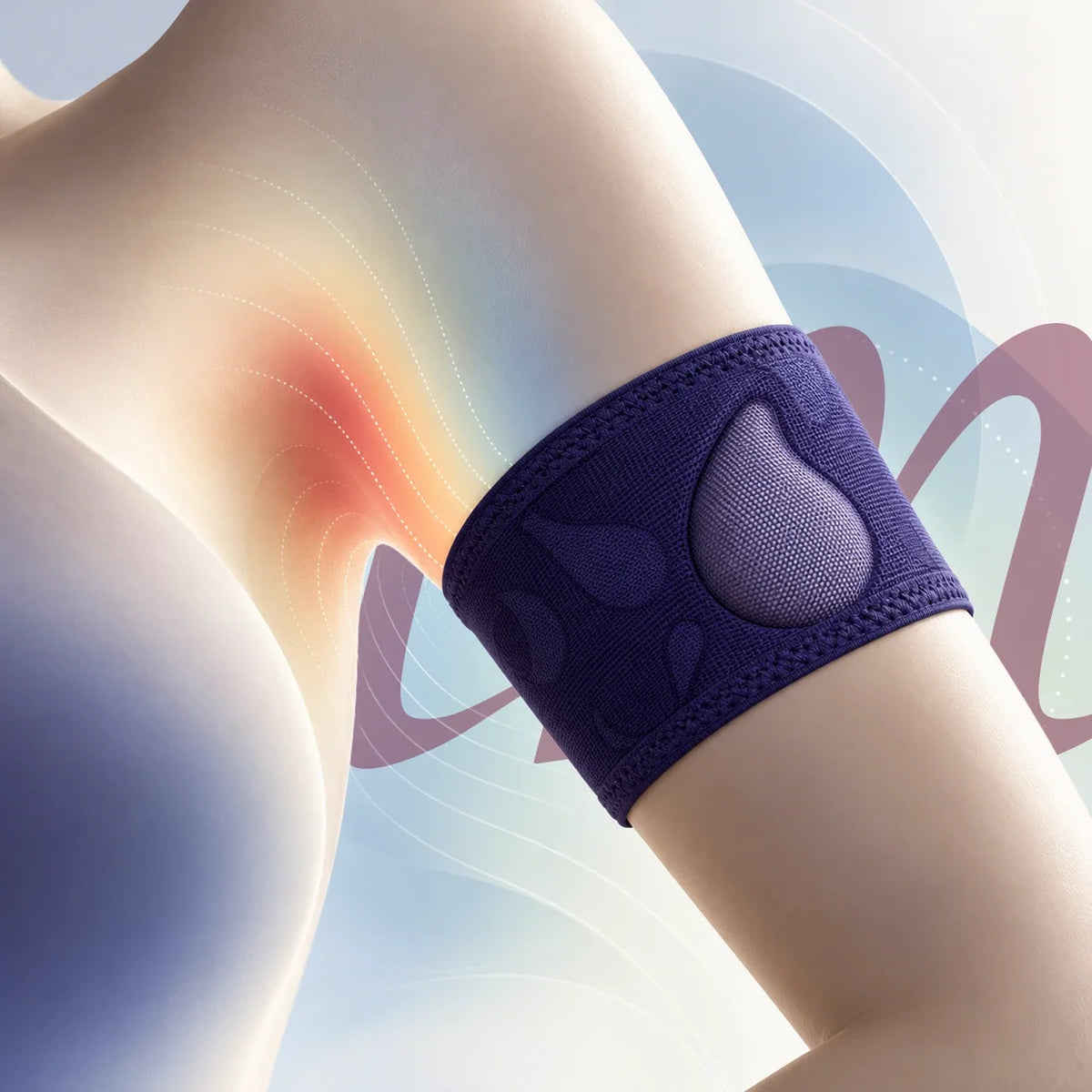
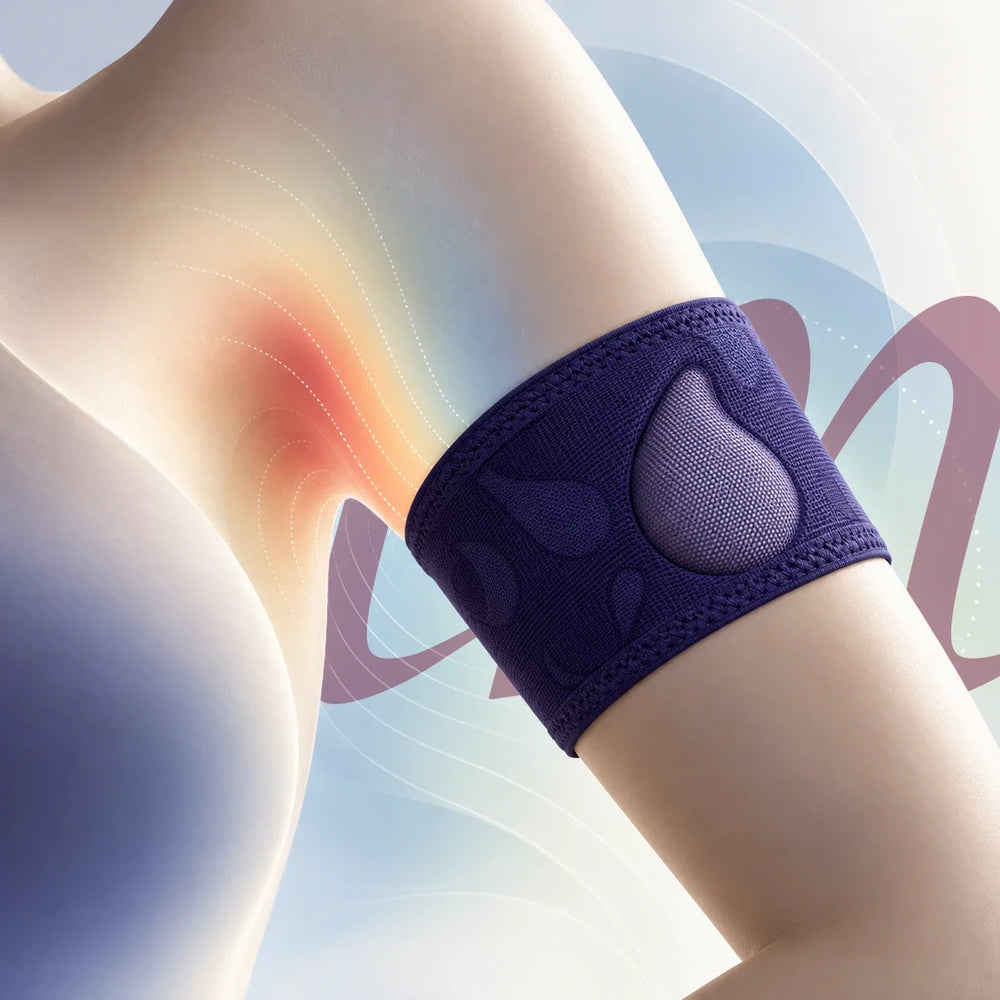
Tempdrop is designed to sit high on the inner upper arm and measure axillary temperature while you sleep. Rather than asking for one waking thermometer reading, it collects overnight sensor data and processes the pattern into a nightly result for cycle tracking.
What does “axillary” mean?
Axillary simply means the underarm or armpit region. Tempdrop's placement keeps the sensor close to the axillary area rather than on a more distal site such as the finger or wrist.
That does not mean every upper-arm device is automatically more accurate than every ring or watch. Wearables use different sensors, sampling strategies and algorithms, so the whole measurement system matters, not just where it sits.
Why measurement location matters for fertility tracking
Temperature varies by site
Peripheral skin temperature can respond to blood flow and environmental conditions differently from measurements taken nearer the torso.
Overnight data add context
A wearable can sample across sleep rather than relying on one moment immediately after waking.
The algorithm matters
Useful fertility tracking depends on turning sensor readings into a consistent trend that can reveal the post-ovulation thermal shift.
What the Tempdrop study actually tested
A peer-reviewed study published in Sensors in 2025 evaluated Tempdrop's overnight axillary-temperature method in 194 cycles from 125 participants. Researchers compared the Tempdrop method with the Clearblue Connected Ovulation Test System as an LH-based reference.
The study reported 93.3% agreement for the estimated ovulation date within ±2 days of the LH-based reference, alongside 96.8% sensitivity, 99.1% specificity and 98.6% overall fertile/non-fertile day classification accuracy under the study's definitions.
That 98.6% figure is not “98.6% raw temperature accuracy”. It describes how days were classified in the study. The distinction matters because impressive numbers are only useful when we explain what was actually measured.
How does upper-arm tracking compare with wrist and ring wearables?
A 2026 systematic review and Bayesian network meta-analysis gives us a useful independent answer at category level. Across the included fertility-tracking studies, wearable digital technologies had a pooled fertility-window detection accuracy of 88%.
When the researchers separated temperature measurement by site, wearables using more proximal sites such as the axilla, chest, lower abdomen or ear had pooled accuracy of 87%, while distal wrist and finger temperature methods pooled at 88%. Band and ring formats also both pooled at 88%.
That is useful because it stops us making the wrong claim. The evidence does not say that an upper arm automatically beats a wrist or finger. It says wearable temperature tracking can work well across several body sites when the sensor, placement and algorithm are designed around that site.
Tempdrop's advantage is that its specific upper-arm method also has device-level peer-reviewed validation. Its 194-cycle study gives us evidence for the complete Tempdrop method rather than asking us to infer performance from wearable research in general.
What this means in everyday use
The practical advantage of Tempdrop is the combination of a dedicated upper-arm measurement site, overnight collection and an algorithm designed specifically around cycle-temperature patterns. That can remove the strict waking routine associated with a manual BBT thermometer.
If you want to understand the difference between a wearable and a bedside thermometer, our BBT wearables vs thermometers guide owns that comparison. For the broader basics, use our complete BBT guide.
Tempdrop Fertility, Cycle & Ovulation Tracker
Tempdrop is worn high on the inner arm overnight to collect temperature data for cycle tracking. Its value is not simply “it sits on your arm”; it is the complete measurement method around that placement, backed by device-specific peer-reviewed validation.

Upper-arm temperature tracking: quick answers
Why doesn't Tempdrop go on the wrist?
Tempdrop was designed and validated as an axillary upper-arm sensor. Moving it to another body site would change the measurement conditions and would not be the method evaluated in its device-specific research.
Is axillary temperature the same as core body temperature?
No. Tempdrop is an axillary skin-temperature wearable. Its value comes from consistent overnight measurement and interpretation of the pattern, not from claiming to measure core temperature directly.
Is 98.6% the accuracy of the temperature sensor?
No. In the 2025 study, 98.6% was the overall accuracy for classifying study-defined fertile and non-fertile days against the reference method.
Has Tempdrop been compared directly with every ring and watch?
No. The 2026 systematic review compared evidence across wearable designs rather than running one direct Tempdrop-versus-every-device trial. It found pooled fertility-window accuracy of 88% for both band and ring formats, while Tempdrop has its own separate device-specific axillary validation study.
The bottom line
The upper arm gives Tempdrop a specific, repeatable measurement location, and its published study supports the performance of the complete axillary tracking method. The wider 2026 evidence also shows that wearable fertility tracking performs strongly across several body sites. The important point is therefore not “arm beats finger”; it is that Tempdrop's particular upper-arm method has been designed for that location and validated in peer-reviewed research.